What happens when a woman says exactly what she means, and we actually listen?
Lizbel Ortiz has not forgotten the family photograph.
On Cine Papis, she is discussing Encanto, a movie she loves. She appreciates the reconciliation, the grandmother’s grief, the emotional ending. Then she returns to Mirabel being left out of the picture. The husbands who married into the family had no magical powers, either. They were included. Why wasn’t she?
“You did my girl dirty, bro.”
Oop, there it is. The joke lands. So does the observation. A moving explanation for someone’s behavior has not erased what they did to somebody else.
Earlier in the episode, Ortiz explains why she chose Encanto despite her love of horror: its characters, their different shades, even the tiles that reminded her of her grandfather’s house in the Dominican Republic. She recognizes something of her family in it. That familiarity gives her more to notice, more to enjoy, and more to question.
Lizbel is brilliant. Look at what she does here: remembers a detail, tests the movie’s own logic against it, and makes the contradiction funny enough that we can’t pretend we missed it. That precision is part of the pleasure. So is her refusal to dress the observation up for the respectability police.
I love that she doesn’t make herself smaller. We have enough people policing how women speak while barely listening to what they say. Lizbel has observations of her own. Questions of her own. Why should getting through the door require leaving any of that outside?
A mind of her own
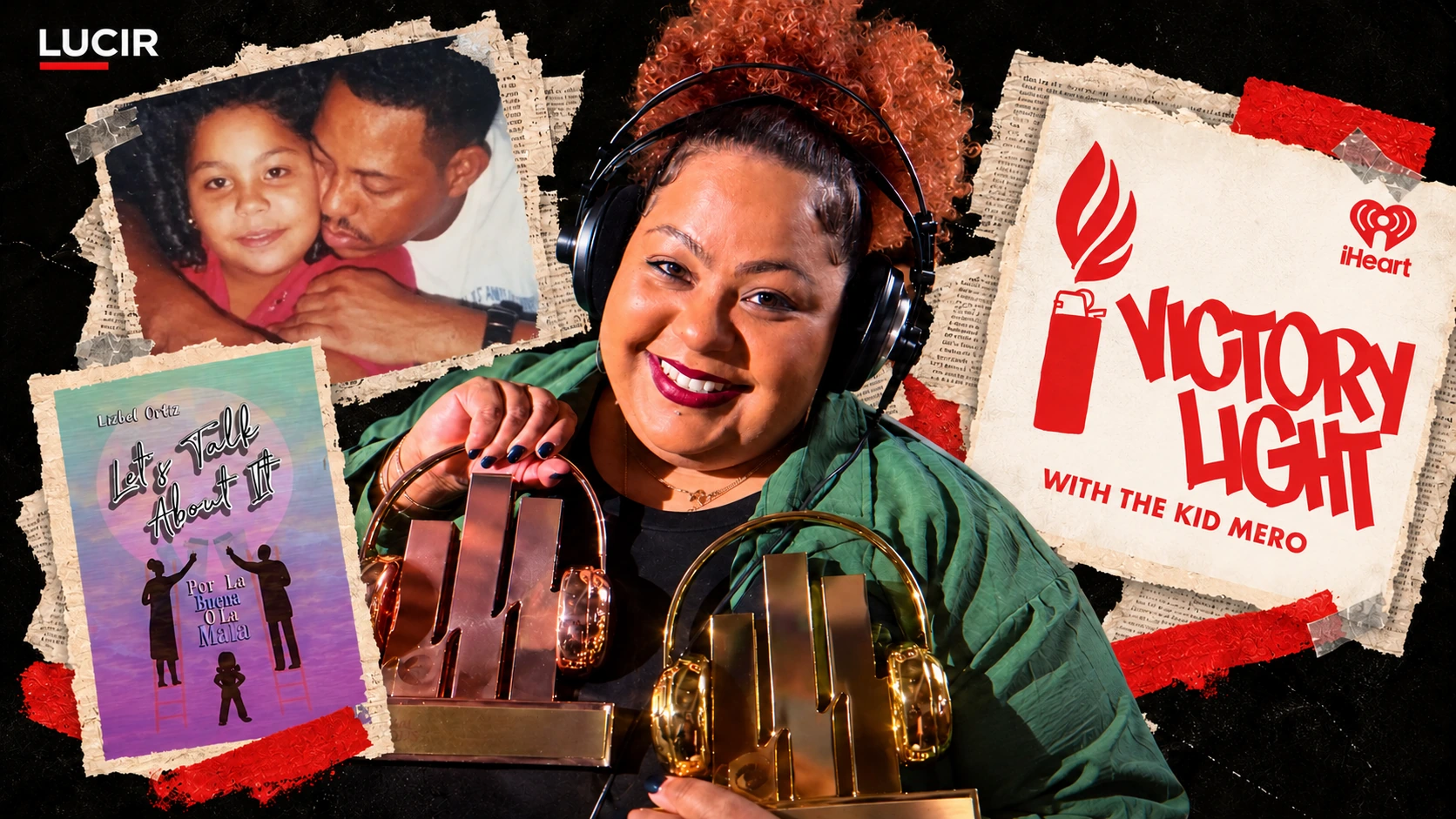
Ortiz is a writer and co-host of Victory Light alongside The Kid Mero and Rainey Ovalle. Bringing those three together was a stroke of genius. There is a chemistry here I can’t imagine a roomful of suits knowing how to put on paper. I hear the familiarity, the quickness, the pleasure they take in each other. Victory Light is my number-one podcast right now. I knew and engaged with Mero’s and Rainey’s work before, and their talents deserve their own praise. Lizbel is the one who brought me here full time.
You know the expression, “She can hang with the boys.” With Lizbel, the boys better learn how to hang with her. She’s quick with it. Mero and Rainey take what she dishes out, and I love the affection in that exchange. I recognize it. Plenty of us Dominicans bond through busting chops. You get yours in; I get mine in. We laugh. That’s family.
I’m not in the room with them, but I recognize something of home in how they talk to each other. I follow their work, together and individually, and I come away with something: an observation I hadn’t considered, a familiar experience seen from another angle. Lizbel makes that familiarity worth returning to. The pleasure travels beyond the room.
In his Bronx Times interview, Mero described Lizbel through a recognition of his own. She reminded him of his sister, of New York women whose voices mattered and needed to be heard. “That woman needs to be heard,” he said.
There is affection in that recognition, in hearing something familiar and wanting others to hear her, too. Props to Mero for acting on it. The intention, the execution, the impact deserve credit.
And give Lizbel her due for choosing to build this with them. She brings her own credibility, her own judgment, her own work. Her presence gives the room something it couldn’t have without her. The queen’s pulling up a chair? That’s an endorsement, too.
It leaves me thinking about how we extend that attention beyond the familiar. Who deserves our ear before they remind us of somebody we love?
Our own communities can pass on us, too. Sometimes they go further and help suppress us. The majorities within our minorities can get awfully comfortable deciding who belongs. At the 2004 DANR conference, Dr. Silvio Torres-Saillant challenged Latino scholarship that excluded Dominican voices and Dominican graduate students who treated scholars from other groups as more authoritative than their own mentors. I hear a warning there for anyone who recognizes intelligence only after somebody else has approved it.
He also recalled how Frank Bonilla, the Puerto Rican director of Centro de Estudios Puertorriqueños, disregarded a warning that the Dominican institute would grow at other Latino initiatives’ expense. That is the kind of solidarity worth naming. I’ll acknowledge an ally who opens a door, including a white ally, when our own people won’t. Mero has described dancing merengue with his mother on Jimmy Fallon’s show as a moment of representation. That platform mattered. His talent and audience were already there. I can give an ally credit without handing over the artist’s accomplishments, too.
We have work to do within our own communities. We can recognize a woman’s brilliance and still expect her to accommodate our egos, our machismo, our ideas about how she ought to behave. Racism, misogyny, xenophobia: being on the receiving end of prejudice doesn’t spare us the responsibility of examining what we pass along. The expectations attached to marianismo deserve scrutiny, too.
But let’s not turn that critique into another way of blaming women. Tracy Bachrach Ehlers’s work on Guatemalan wives brings economic vulnerability and survival strategies into the discussion. Deniz Kandiyoti’s work on patriarchal bargaining asks us to consider the constraints women navigate. Survival under sexism and misogyny is not the same as endorsing either. The related Madonna/whore dichotomy, studied by Orly Bareket and colleagues, sorts women into “pure” and “promiscuous” boxes. These are different concepts, but I see a familiar demand underneath the policing: be the woman we approve of. Who gets praised for accommodating us? Who gets punished for refusing?
Recognition is easy enough when it asks nothing of us. What happens when making room means giving something up?
Calling a woman outspoken should never become our excuse to stop describing what she has actually said. Outspoken tells us she spoke. What did she notice? What did she question? What did the rest of us miss? Those questions require more of us than a compliment about her nerve.
Her intelligence deserves to be named with the same ease as her boldness. Better yet, describe what it does.
The woman doing the asking
Her book, Let’s Talk About It: Por La Buena O La Mala, was published in 2020. Its synopsis begins with the conversations of first-generation Americans raised by Caribbean parents, taking up racism, sexism, religious authority and accountability. Ortiz explains the title as an insistence that these conversations have to happen. Many of us know that tone.
Family sayings can travel farther than family members. They survive a move, a border, a generation. We learn to repeat them long before anyone asks us to explain them. What happens when somebody does?
In a December 2020 interview with Janine Hernandez, Ortiz recalls doing six book reports when school required one. She loved reading, writing and taking stories apart. Yet becoming an author frightened her. An appetite for the work had not spared her doubt.
She also describes accepting some editorial suggestions and rejecting others to keep the book her own. There is judgment in that distinction: allowing a piece to improve while remaining responsible for its voice. An editor should be able to hear the difference between a sentence that needs work and a voice they haven’t bothered to understand.
We need more people with her judgment editing our books, running imprints and leading publishing houses. People who won’t butcher our voices, our lingo, our expressions, our observations, and then congratulate themselves for making us readable. Readable to whom, exactly?
In the Authors Guild’s 2023 income survey of 5,699 published authors, 81 percent of respondents identified as white and 4 percent as Hispanic, Latino or Latinx. The survey includes traditionally published and self-published writers. These are survey respondents, not a census of every author. I see an industry with a racism problem, including in who gets to recognize talent and decide which voices deserve investment.
I’ve written about this in my American Dirt essay. Even white women can be praised for telling our stories while gatekeepers look past writers from our communities. They can find somebody to speak for us, but they can’t find credible writers among us? As if. Lizbel is right there. And you will find her if you look for her. Somewhere in your own community is another voice, another vision, another body of work you’ve refused to acknowledge. You don’t need a copy of Lizbel. You need to look at who you’ve been overlooking.
Being marginalized in one way doesn’t stop someone from benefiting from a nasty hierarchy in another. Nobody gets free of discrimination by keeping somebody else shackled to it.
My earlier essay on privilege, originally published in HuffPost Latino Voices, asks us to look at who gets left out even within our communities. Getting one of us through the door doesn’t settle whose language gets scrubbed, whose connections count, or whose story still never gets a hearing.
I believe they’re leaving money on the table. There is an audience. Learning how to reach us is their job. I suspect some would rather call us a risk than reckon with their own biases and mediocrity.
Her thinking could change, too. She describes learning to see the limited choices behind domestic roles she had once resented, and questioning how girls were taught to care for everybody except themselves. Her criticism grew more compassionate as her understanding grew more precise. That is a demanding kind of honesty.
She wanted readers to find “a friend in a book,” with answers she had needed when she was younger. Somewhere, somebody has a question they have learned to keep to themselves. On Goodreads, reader Vasthi Goris praised the book’s conversational voice and how it connected with her own Dominican upbringing in New York. That is a reader recognizing herself on the page.
The conversation travels
Her interest in these questions predates Victory Light. In June 2019, En Latinidad featured Ortiz in English- and Spanish-language episodes about Cardi B, Dominican identity and stereotypes. The listings introduce her as a fan and frame the discussion around Black Latinidad.
A woman can be a fan, have a sense of humor, and take the racial politics surrounding a star seriously. Why would we expect her to choose? Popular culture is worth thinking about while we are enjoying it.
We know how to celebrate Dominican talent on a court. From Al Horford to Karl-Anthony Towns, we have names to say with pride.
We have brought plenty to music, too: merengue, bachata, salsa, mambo, dembow, hip-hop and reggaetón. I’ve written about the Dominican hands behind Latin music’s big rooms and the credit we are still owed. Johnny Pacheco alone gives us plenty to discuss about our place in salsa.
But how much of us do people recognize beyond what entertains them? We have writers and thinkers worth knowing, on the island and throughout the diaspora. Spend some time with Dominican Writers. There is plenty to discover.
Our humor carries intelligence, too. Lizbel gives us good reason to pay attention to both.
Her family is multitalented. Her brother, comedian Radel Ortiz, has credited his family with helping him reach an audience, with their mother, Isabel Núñez, appearing in the skits that made him widely known. There is much to honor in that shared creative life: the mother’s presence, the brother’s comedy, the pleasure of people making something together. Lizbel brings her own interests and abilities to that family story, as well as to her writing, podcasting and production work.
Dominican Writers credits Ortiz with For Our Own, a poem written for STARZ and Lionsgate, and describes her directing and producing stories, poems, lessons and skits online. The organization also listed her to teach digital storytelling at its 2026 Cabarete retreat. Her work takes several forms: a book, a poem, a conversation, a piece made for a screen.
I’ve followed her poetry online, too. The visual poem about her father is one I want people to spend time with. Her work has room for that tenderness alongside the humor and the questions. I want us to look closely enough to appreciate the range.
Writing for a page, a performance or a screen means deciding how an idea will reach somebody. Where does it begin? What needs room? What will a joke let us approach? A short clip can make those decisions look effortless. We should be curious about the work that makes it feel that way. The craft deserves attention along with the personality.
Make the room
I can’t say I’ve disagreed with anything she’s said. If that day comes, I might be the one who needs to reconsider. I’d welcome the conversation if she wants to have it. She has no obligation to humor my shit, or ours. It’s her world and her word. Who are we to make her defend her right to either?
If we do have that exchange, I want us to come out of it better able to understand each other. We can question an argument without making a woman defend her right to speak.
That’s my responsibility, too. So is examining what I expect of a woman before I decide she deserves to be heard. The white gaze, the male gaze, the gatekeepers within our own communities: there are enough demands to accommodate. I appreciate the fullness Lizbel brings into the room.
She has already been doing the work. We should examine what we put in her way, and what we can help move. She shouldn’t have to carry that part alone.
Spend some time with Lizbel’s work. Read her book. Listen to her poetry. Follow her into a conversation on Victory Light. Hear what she notices. See what stays with you.
And if you have a microphone, a program, a publication, consider whose intelligence you have yet to make room for. Invite women like Lizbel to shape what gets discussed. Then let their ideas matter after the invitation.
I want a media culture where a woman can be funny, incisive, imperfect and taken seriously. Where we have enough room to disagree with her without treating her presence as the mistake. Where a strong voice invites a stronger conversation.
We need to flood the airwaves, the interwebs, the social platforms, Hollywood and the C-suite with women like Lizbel. Give them the microphone, the budgets, the authority to shape what reaches us. Her work already gives us reason to listen.
Look for it. And if you encounter it in the wild, make sure you turn up the volume. And listen. Trust me, you will be entertained. You will learn, fam. Por la buena o la mala.