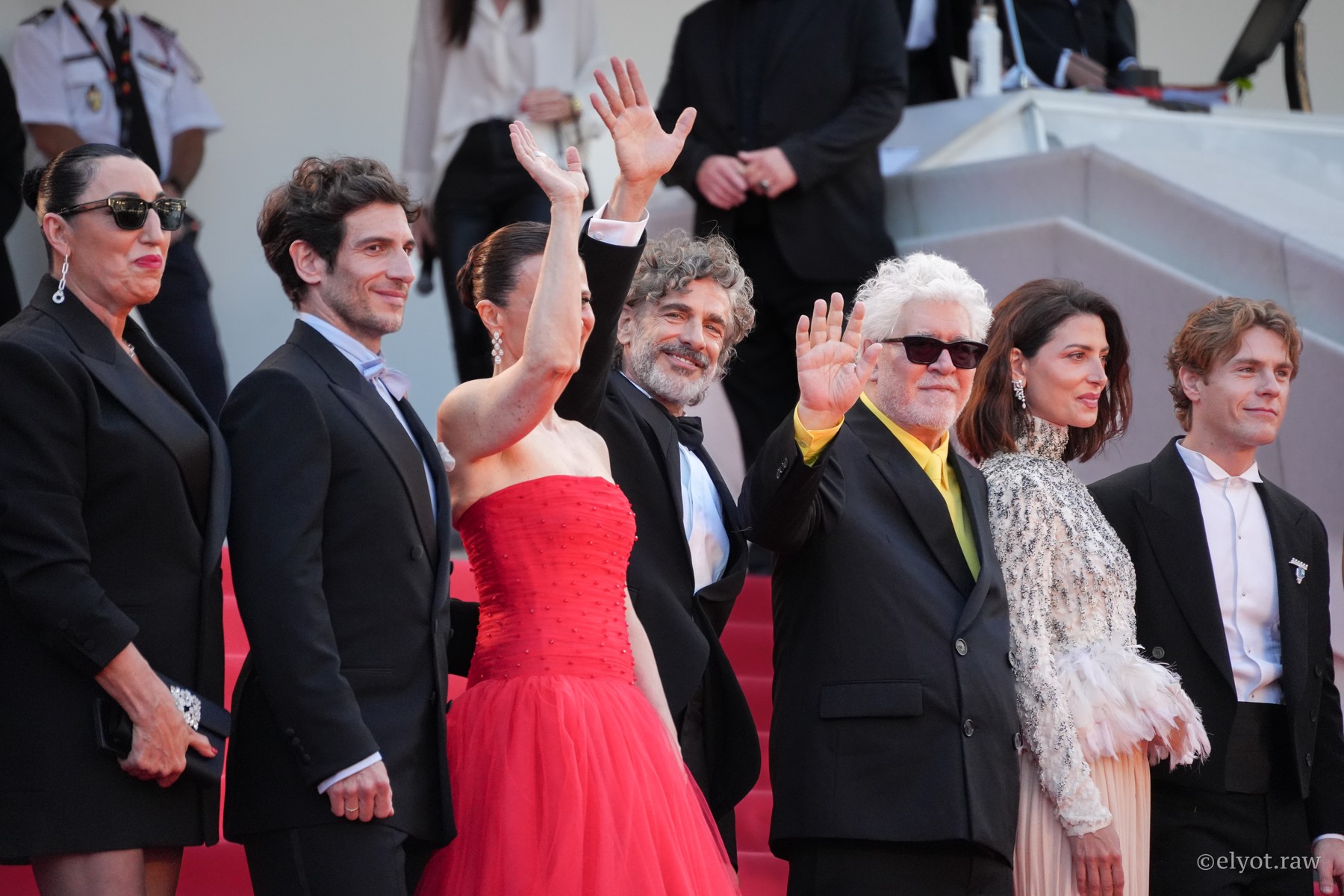
Argentine actor Leonardo Sbaraglia plays the filmmaker at the center of Bitter Christmas, Pedro Almodóvar’s new inquiry into the lives an artist turns into material. The Spanish film, also titled Amarga Navidad, has its U.S. premiere at the New York Film Festival on October 6 at 5:30 p.m. ET. Almodóvar and Milena Smit are scheduled for the Q&A. The role places the Argentine performer at the story’s center of narrative power: his character invents the lives that other characters inhabit.
The premise establishes two connected acts of creation. Elsa, an advertising director living in 2004, becomes the subject of a script written by Sbaraglia’s Raúl, a filmmaker in 2026 struggling to work. His imagination draws on his partner and assistant as well as himself. The distributor describes Elsa as a version of Raúl, filtered through fiction.
Sbaraglia has described the invitation to work with Almodóvar again as particularly meaningful to him as an Argentine actor. In an April interview, he also recalled the strain of performing Spanish identity early in his career, even asking his mother not to speak to him in Argentine Spanish while he prepared a role. His account offers a reminder that moving between national cinemas involves an actor’s own negotiations with identity and belonging.
Raúl’s situation gives autofiction an uncomfortable practical dimension. The freedom to revise an experience belongs to the person doing the writing; the experience itself may belong to several people. A remembered conversation can be reshaped into a scene, an unresolved conflict into a satisfying ending. The resulting work might illuminate something its participants could not articulate. It might also settle an argument in favor of the person who controls the final draft.
In its account of the film, Cannes identifies Raúl’s longtime assistant Mónica, played by Aitana Sánchez-Gijón, as a source of his inspiration and a person who challenges his use of her life. Their working relationship makes the question sharper. An assistant’s closeness to an artist can be part of her job. Access to that person’s confidences does not, by itself, answer the ethical question of what the employer should make public.
A useful discussion therefore has to move beyond guessing which fictional person corresponds to someone in Almodóvar’s life. That exercise can reproduce the very appetite under examination: treating another person’s intimacy as a puzzle for an audience to solve. More consequential questions concern power. Who can object to a portrayal? Who will be recognized despite a changed name? Who receives the freedom to call an account fiction, and who must continue living with its consequences?
There is room here for both invention and argument. Requiring universal agreement before telling a story could make difficult family histories almost impossible to write. Yet calling an account fictional cannot settle every objection to its use. An artist can have something urgent to say while remaining accountable for how another person’s vulnerability enters the work. Raúl’s relationship with Mónica makes those questions concrete: the person who benefits from a story may be better placed to defend it than the person whose life supplies it.
New York audiences encounter these questions ahead of a November 13 opening in New York and Los Angeles and a November 25 nationwide release, according to Sony Pictures Classics. Today’s premiere offers a timely reason to ask what audiences owe the people behind an artist’s material, too. Admiring a story can coexist with attention to the lives it rearranges.