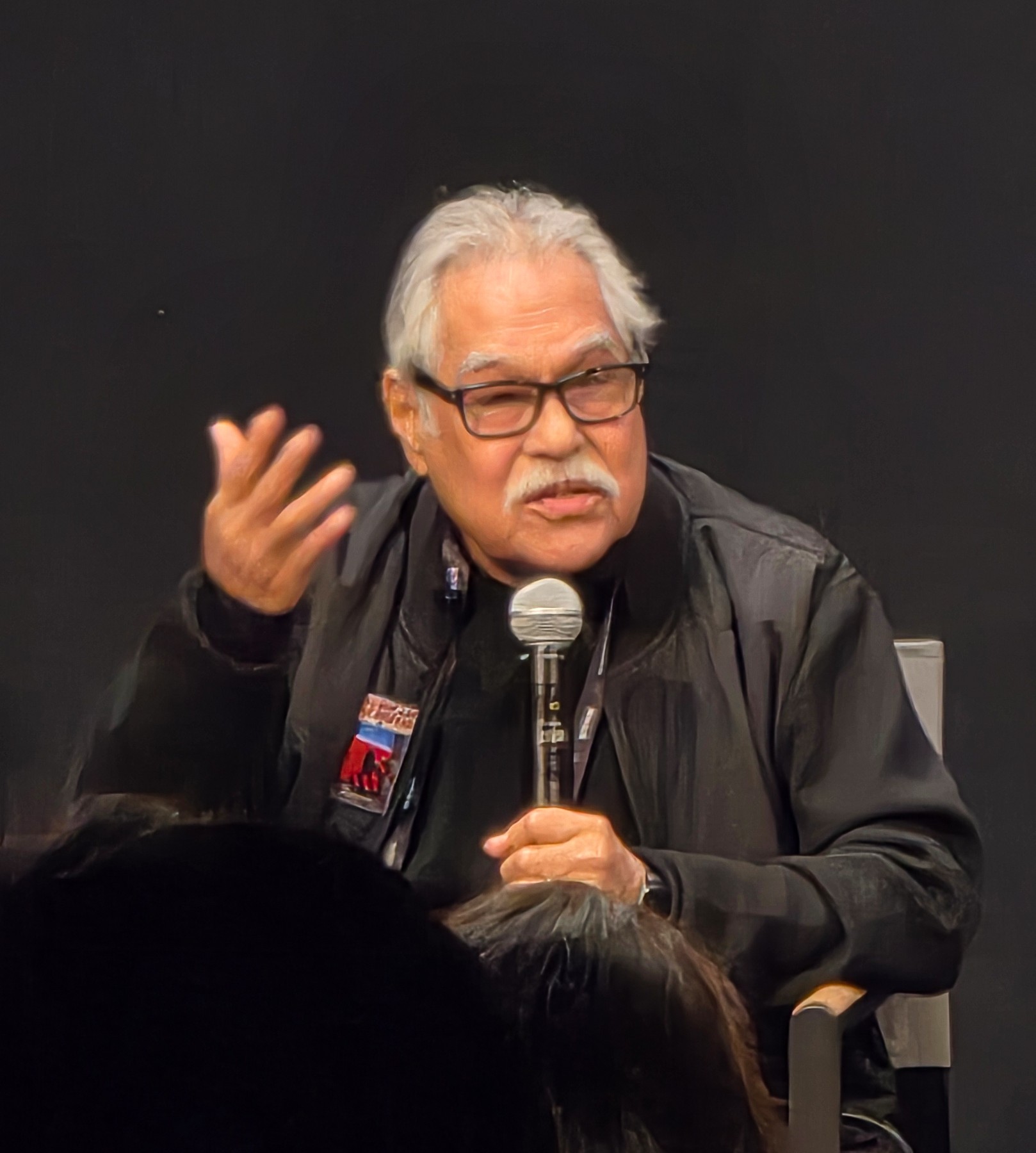
Tonight’s PBS premiere of American Pachuco: The Legend of Luis Valdez puts a consequential question back in circulation: who gets to build American culture? Written, directed and produced by David Alvarado, the documentary arrives on American Masters and VOCES on October 6 at 9 p.m. ET, with local listings determining broadcast times. Its subject’s career offers a way to think about cultural power through the institutions that make creative work possible.
The film reaches public television with demonstrated audience support. It won Sundance’s U.S. Documentary Audience Award and Festival Favorite Award; a Critics Choice Association conversation published September 29 followed what the organization described as a 40-city theatrical run. Those are concrete reasons to revisit Valdez now.
Start with the stage itself. Valdez grew up working in California’s agricultural fields alongside his parents. In 1965, during the Delano grape strike, he founded El Teatro Campesino. The company’s early actos, short theatrical pieces, traveled on flatbed trucks and into union halls. Workers’ struggles supplied the material, and the strike supplied both an audience and a reason to perform.
A truck bed is an unusually revealing foundation for a cultural institution. It changes who can gather, who can perform and what counts as a worthy subject. Theater becomes something people can make together within the conditions of their working lives. Valdez’s early practice suggests that the power to organize an audience belongs inside any serious discussion of artistic achievement.
That question traveled with him. Zoot Suit drew on the 1942 Sleepy Lagoon trial and the 1943 attacks known as the Zoot Suit Riots, bringing a charged history of Mexican American life into the theater. Its Broadway arrival in 1979 expanded the venues available to Chicano storytelling. The achievement also invites scrutiny of the habits by which a cultural center decides when a community’s history has become nationally significant.
La Bamba, his 1987 film about Ritchie Valens, carried that work into popular cinema. Its foundations were intimate. In a 2024 Library of Congress interview, Valdez explained that four interviews underpinned the movie: with Valens’s brother, mother, manager and girlfriend. The method matters. A story that would circulate through Hollywood was grounded in the memories of people close to its subject, allowing family knowledge to help shape a public account.
American Pachuco adds another institutional layer: the archive. More than 80,000 feet of Teatro Campesino film received digital preservation through the filmmakers’ collaboration with the University of California, Santa Barbara, according to the Library of Congress. The material had not been seen before and its physical condition threatened its survival. Making the documentary also meant safeguarding a cultural record.
That detail deserves a place alongside the awards. Cultural memory requires storage, money, skilled labor and institutions prepared to sustain it. The survival of a performance on film determines whether later generations can study how it was made, whose labor supported it and which ideas it carried.
For Latino audiences, tonight’s premiere offers an occasion to ask what follows recognition. The question applies to theaters, broadcasters, universities and funders: what lasting capacity are they helping artists and communities build? Valdez’s history gives that discussion a concrete starting point: a company, a stage, an audience and a record others can inherit.